Books
Forbidden Ties
I. Forbidden Ties
A Museum-Quality Cultural Manifesto on Love, Meaning, and the Invisible Threads Between Us
Forbidden Ties enters the literary landscape not just as a story of romance, but as an excavation of emotional truth.
At its essence, this novel acknowledges a simple but profound cultural reality: some connections defy logic because they are born of something deeper than reason. The narrative arc—centered on desire that should not be and a bond that cannot be ignored—moves beyond genre into philosophical territory. It asks readers to feel what it means to be drawn to another person not in spite of boundaries, but through them.
The slow-burn, emotionally intricate pacing reflects a broader cultural hunger for stories that refuse easy resolution. In Forbidden Ties, tension isn’t merely a dramatic device; it is the narrative structure through which identity and attachment are interrogated. The characters’ internal conflicts become mirrors of our own hidden places—those parts of the self that hope, doubt, fear, and want without apology.
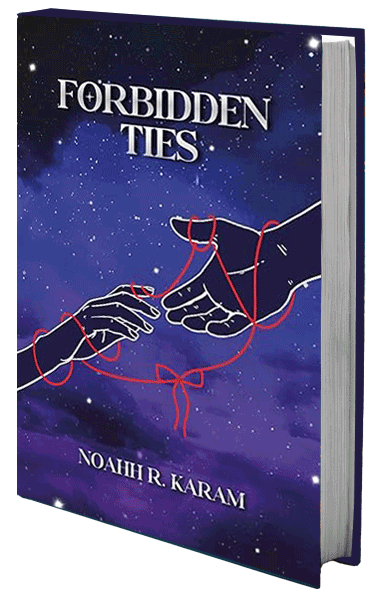
What gives the book its cultural gravity is its insistence that emotional experience cannot be sanitized. Rather than presenting love as a tidy arc from conflict to redemption, it accepts complexity: longing is messy, boundaries blur, and desire can be both exhilarating and dangerous.
The book operates philosophically as a conversation between what society teaches us about connection and what the heart feels regardless of rules. Forbidden Ties thus becomes more than a narrative; it becomes a space where readers can confront the invisible algebra of attachment.
Moreover, the project reflects an aesthetic commitment to truth in emotional representation. It does not romanticize suffering but acknowledges that emotional risk is one of the most revealing and human experiences we possess.
In a cultural landscape crowded with formulaic narratives, this novel stands apart as testimony to layered interior life. It reminds us that certain bonds—whether welcomed or contested—can shape us, transform us, and ultimately reveal the architecture of our own hearts.
Through restrained intensity and emotional realism, Forbidden Ties invites readers to witness what it means to love where reason refuses to tread. It celebrates the paradoxical beauty of human attachment: that we can choose only some things in life, but feel undeniably bound to others.
II. Calgary Creative Economy + Literary Futures
A Forward-Looking Industry Editorial on Narrative, Community, and Cultural Production
The publication of Forbidden Ties represents an important moment not just for its author, but for the evolving landscape of independent literary creativity in Calgary and beyond.
As Alberta’s creative economy deepens its engagement with narrative forms that resonate across media, novels such as this one demonstrate the vitality and cultural relevance of regionally supported publishing ecosystems. The book’s emergence from a collaborative process—edited, published, and actively promoted with guidance and strategic support—signals a maturing infrastructure that values storytelling as both artistic and economic force.
Calgary’s cultural industries are no longer solely defined by visual media or production infrastructure. They increasingly encompass literary arts, author development, and narrative entrepreneurship. The success of independent books within this milieu reveals growing audience appetite for stories rooted in emotional realism and complexity.
The future of Calgary’s creative sector will be shaped by an integration of three key forces:
1. Narrative Diversity Across Platforms. As hybrid publishing models continue to blur lines between print, audio, screen adaptation, and digital community storytelling, projects like Forbidden Ties are prime candidates for transmedia evolution. Readers today are not merely consumers; they are participants who follow stories across formats and contexts.
2. Regional Voice as Global Conversation. Calgary and Alberta are uniquely positioned to contribute original narratives that reflect lived experience while engaging global emotional universals. Independent authors and creative collaborators within the region increasingly contribute work that travels beyond local borders without compromising cultural specificity.
3. Literary Production as Economic Strategy. Cultural production—publishing, editing, promotion, and literary community building—is emerging as a substantive economic node. Books attract readership, stimulate educational dialogue, and foster community through shared experience. Independent literary work thus becomes not just art, but infrastructure for cultural connectivity and marketplace diversification.
Forbidden Ties exemplifies how independent novels can flourish when they are supported by intentional creative partnerships and thoughtful editorial guidance. The collaborative process behind the book’s development underscores the significance of mentorship, professional publishing support, and strategic promotional investment in elevating regional voices onto broader cultural stages.
In this sense, the future of Calgary’s creative industries is not simply about growth in quantity, but in emotional, cultural, and intellectual depth. The communities that support storytellers, editors, publishers, and readers are also nurturing the conditions for cultural innovation.
Independent novels like Forbidden Ties suggest a future in which Canadian creative collaboration bridges regional literary communities rather than restricting storytelling to a single city.
Although the author, Noahh Karam, is based in Ottawa, the editorial, publishing, and promotional development supported through Calgary’s creative network reflects the growing interconnectedness of Canadian cultural production.
This model illustrates how cities such as Calgary can function as cultural incubators and strategic partners in national literary ecosystems. Independent publishing work emerging from cross-regional collaboration contributes not only to local identity formation but also to Canada’s presence within global narrative discourse.